Blog Home  |  Archive  |   Search  |  Sign in  

Chris Crane - One CEO’s Journey to find the Highest Possible Leverage – Micro Loans to Poor Women

by Lloyd Reeb 15. October 2009 06:59

Africa-Ghana-2008%20Chris%20Jane%20kids%202

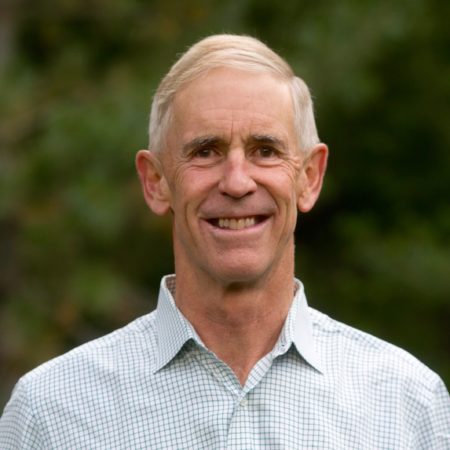
Chris Crane grew his company then sold it a decade ago to run one of the world’s leading microfinance organizations – Opportunity International. He could have grown his net worth and lived a lavish life but, like many of us, he felt that would soon lack meaning and purpose. He could have kept his company and just written big checks to charities that help the poor. Instead he found a unique niche where he could leverage his business skills multiple times over to have a mind-blowing impact around the world doing what governments and charities simply can’t do, break the cycle of poverty. He’s done it by empowering millions of budding entrepreneurs through very small loans.


I wanted to know why he chose this path for his second half of life, and I wanted to know how.


Chris is a Harvard MBA who spent time in venture capital, then ran Nitches Inc. and eventually bought COMPS InfoSystems in 1992. As CEO he oversaw the acquisition of 13 companies, raised four rounds of venture capital and led the company in an initial public offering, increased its sales force, reduced costs, and expanded into new markets. COMPS grew 20 – 30 percent annually. When he sold the company in 2000, it was the largest commercial real estate sales electronic database publisher in the US. But he wasn’t satisfied. Chris read the book Halftime by Bob Buford, which crystallized in his mind that there was more to life than just success. He had been exploring innovative ways to make a difference in the lives of the poor. He was looking for even more leverage - more lasting impact. He found himself at Halftime, on a journey from success to significance.


Chris has been on this journey now for a decade and I wondered what he’s learned in the process about real leverage?

“Bottom line is I’ve learned that a business executive can have a huge impact on a humanitarian organization that many non-profit CEO’s may just never have. Opportunity International is committed to providing a complete range of financial services to help the poor to work their way out of poverty, and you have this multiple chain of leverage. Say that an individual or a company, like Caterpillar for example who recently made a major donation, gives Opportunity a grant, we put it to use in one of our banks around the world. Our bank then leverages it through local capital markets three to one. We leverage it again by loaning it to these women who are going to pay us back, and in the process they often double and triple their income. The first thing they do with the extra income is to send their kids to school, make sure the kids are fed, and make sure the kids get healthcare. So, now you have children that are going to be educated. They not only finish high school, but a number of our clients send their children to college.”


After seven years Chris has recently handed his CEO role over to someone else to manage. Chris has grown the organization to serve over 1,500,000 poor entrepreneurs in 28 developing countries with loans as little as $50, training them in basic business practices, and counseling in personal development. Introducing many to Jesus. Where do you go from there? Where does a guy like Chris look for another endeavor with the same kind of leverage?


“There is a niche in microfinance that few are serving. There are tens of thousands of low budget private schools. They charge $3 a month or $6 a month tuition. They provide a great education. Studies show that students in these slum or low budget schools in Africa score significantly higher than the children in the government schools on the standardized tests. The government schools are unionized, teachers really can’t get fired, and they consequently often don’t show up to teach class. There will be a hundred to a hundred and thirty kids in a classroom in the government schools compared to thirty or forty children in a classroom in the low budget private school.


“So, these schools are starved for capital, they are in rickety buildings, and if we extend to them five and ten thousand dollar loans they can build more classrooms, some can actually buy computers, set up a little computer lab. They teach English, which is one of the keys to increasing income. One study showed that if by age 18 children from the slums speak English their lifetime income will be three times what it would otherwise be. The idea is to finance these schools and help them teach technology, to teach entrepreneurship. To teach students to be job creators and not job seekers because there just aren’t any jobs when they come out of high school. And then to be able to provide them loans so they can start up their own businesses right out high school.”


How can you find an opportunity to make your second half really count using your unique skills, experiences and in your areas of interest? How can you find this leverage? If you’re looking for leverage in your second half, what are the steps? Having coached hundreds of people like Chris through midlife transition for years, my advice is don’t quit your job or sell your company.

There are three simple steps that will help you test your way into clarity, the very same three steps Chris has taken:


Get clear, get free and get going.


-Get clear on your core strengths, and the difference you would most like to make in the world. 

-Get free of the low value activities/investments that clutter up your life,

-Get going in a small way, rolling up your sleeves along side someone like Chris who already knows how to get stuff done.


Your Next Step

A Halftime Coach can help you gain traction quickly and avoid many of the pitfalls. Click here to ask Greg Murtha which Halftime Coach would be best for you.

Currently rated 5.0 by 1 people

  • Currently 5/5 Stars.
  • 1
  • 2
  • 3
  • 4
  • 5

Tags:

General

Share on Facebook Twit This! Share with LinkedIn

Rich Stearns, CEO of Lenox China to President of World Vision: Ten years later

by Lloyd Reeb 30. June 2009 12:38

Lessons he has learned - Ten Years Into his Second Half.

Halftime, by its very nature is a journey. It’s a brand new phenomenon that very few in previous generations experienced, and perhaps that’s why we find it perplexing. So we can learn a lot from our peers who are a few steps ahead of us.  Ten years ago Rich Stearns left his post as CEO of Lenox, Inc. to become CEO of World Vision. On his watch millions of poor kids have been impacted. I asked him to unpack for us what he’s been learning since his Halftime transition.  


“I remember when I got to World Vision I sent Bob Buford a letter saying I could be the poster boy for the Halftime movement (www.halftime.org).  I had read his book in 1997 and ended up at World Vision in 1998”  


Now Rich has written his own book chronicling his ‘Halftime’ experiences. It’s called:  The Hole in Our Gospel.  I interviewed Rich about the themes from his book.” I asked Rich to take us back to what was happening in his career at Lenox when he read Bob’s book and what spawned the desire in his heart to be involved in serving the poor?   


“I had grown up a relatively poor kid.  My parents didn’t go to high school.  The fact that I could go to two Ivy League schools was a miracle.  So when I got into the corporate world and had early success I couldn’t believe it, it was the American dream come true.  I was living a life my parents could have never imagined, and yet I was trying to do it as a follower of Christ, to be a Christian in the work place.  I was on church boards, school boards, and the board of Gordon College in my thirties. I thought to myself this is what it’s all about.  It was about following the Lord, doing my thing, and never really looking for something deeper or in addition.  I was a donor to World Vision, and I said hey I’ll send the check but I don’t need to get involved.  I’m too busy.  So, when a friend of mine called in 1997 and said that World Vision was looking for a new president, and ‘I think you’re the person that God is preparing for this,’ it was one of those crazy prophesy things.  It was that friend, Bill Bryce that sent me a copy of Halftime. He said I’ve got a book I want you to read.  I said Bill, I’m not interested in this job, I’m not qualified, I’m not available, I’m doing just fine.  If you want to send me a book fine but I’m not going there.   I did read the book and found it quite convicting as I kept thinking about the World Vision job.  I read it and I thought wow, this is a whole different way of looking at life, looking at your giftedness, and how you might serve the kingdom.  I think that’s why Bob’s book resonates with so many people.  It was a radical re-thinking of the question ‘what does God expect of us? -- which incidentally is the subtitle of my new book The Hole in Our Gospel. 


Of course, not everyone is called to sell their company/practice or bail from corporate America to take a full time role in a ministry. Many Halftimers partner with organizations like World Vision in non-staff roles. So I asked Rich, “for people who are just starting this journey, and perhaps wish they could do have the impact you are having around the world, how has your view changed of what God has called you to, and what a life of significance looks like? 


“First of all, back then I was looking at the decision very much was a pro’s and con’s exercise.  Sometimes I use the metaphor of the old show Let’s Make a Deal with Monty Hall.  The contestant had won something, maybe a dining room set and a complete set of Lenox china, and Monty Hall says ‘will you trade what you’ve won for what’s behind the curtain?’ And they hem and they haw, and they say well gee I don’t know.  There could be a year’s supply of pork-n-beans behind the curtain.  I’ve won the dining room set and the china.  That’s worth a few grand.   


“Well, that’s what it looked like to me.  I had won the CEO job, the ten bedroom estate, the Jaguar XK8, the seven figure income, and the earning potential.  And here’s the Lord saying will you give all of that away for what’s behind the curtain, and by the way I’m not really going to let you look behind the curtain to see everything you’re going to get.  You’ve got to trust me.  All I could see is that it was a pay cut; it was give away the home, the CEO title, the Jaguar, move the kids, move the wife, and trust.  Then of course I thought, well this is a job I can’t even do.  What do I know about World Vision, and I’ll probably get fired in a year, then I’ll be unemployed on top of all of it.  The words, “Ye of little faith,” come to mind.  From where I sat it seemed to be all about what my family and I had to give up. It wasn’t about looking at what the Lord was going to do.  God tells us, I know the plans I have for you, plans to prosper you and not to harm you, plans to give you hope and a future. (Jeremiah 29:11)  


“I now look back and laugh at myself because what I was clinging to was dross.  It was vanity, vanity as Solomon would say, chasing after the wind.  What I gained was solid, substantive, spiritually deep, rewarding, relational, and significant.  You know there’s a quote from the book of Jonah, “Those who cling to worthless idols forfeit the grace that could be theirs.”  I came very close to forfeiting the blessings that God had in store.  God can’t fill your hands with His blessings if they’re clinging to something else.  Those things all of a sudden make sense to me looking back ten years.  It has been ten years of tremendous spiritual growth and blessing.             


“After ten years I went back to Lenox to see if there was anybody there that still remembered me.  They gathered in a conference room, about a dozen people that had been there under my watch, and they told me a story of tears and sadness.  There had been five CEO’s since I left, all hired and fired, they had been divested by the parent company, they had been merged, closed five of their six factories, and the people sitting there wore hollow eyed, grim expressions, they’d been through miserable hell in the corporate world.   


“I think the Lord was saying do you see what I saved you from?  That was what you thought was your safety and security.  All that glitters was not gold.  Look where I’ve taken you.  I shared with them about my life at World Vision, and they literally couldn’t believe it because when I left they all thought it was the most stupid thing they’d ever heard.  Some of them admired me but they just shook their head and said who would quit this job to go do that, he’s crazy.  At the end of the meeting they said, have you got any job openings?  We would love to work for an organization like that.  Then three weeks after that meeting I read in the newspaper that Lenox declared bankruptcy and went into Chapter 11.  So those were the idols I was clinging to ten years ago.”  


One more lesson: There’s one big surprising observation Rich makes that you simply don’t want to miss 


“So many people who were in my position might have felt I should keep my corporate job for the sake of my family.  To move my kids, to take that pay cut, to jeopardize the money that might be in their trust fund someday, that’s not fair to them.  I think a lot of men and women might use that excuse to say we would do this but we can’t do this to our kids, or a man might say I can’t do this to my wife.


“Neither my wife nor I grew up with money.  Her dad was a career military enlisted man, and my parents never went to high school, went bankrupt, and had no money. One day, probably in our thirties or early forties, we realized, oh my gosh, we’re raising rich kids.  Our kids are rich kids, and it surprised to us.  Everything that goes along with that moniker of ‘rich kids’ – they were kind of spoiled, had a limited world view, pretty self centered, they’d gotten everything they’ve ever wanted.  As much as we tried to raise them with understanding the value of a dollar, they’re growing up affluent. “Our transition to World Vision happened very suddenly, and I’ll never forget something my wife Rene said, ‘our kids will remember very little of what we’ve told them about values, but they will never forget what we did. They will never forget that mom and dad nuked their comfortable life, stepped away from that CEO job, turned in that Jaguar, sold that dream house for one reason, to follow Christ.’  She was right; it’s had a profound affect on my kids, and my family in a very, very positive way.”  


 “Rich has written a new book The Hole in Our Gospel which the Halftime team highly recommends. I asked Rich what he hoped we’d get from the book. “The message of total surrender, that what the Christian faith is about is taking up our cross daily, and completely surrendering our will, our ambition, our money, our time, our treasure and talent and laying it all at the foot of the cross.  That’s where God wants to get us, and in some ways it’s only then that the Lord can really take us on a journey of adventure and significance, and joy.” 


Questions to for you to ponder: 


  • Obviously, not everyone is called to leave their job and join a non-profit, but are there ways that you are trying to make a deal with God? Are you holding back to see what’s the best offer?
 
  • In what ways does your life model for your kids and grandkids the life and legacy that you most want them to live out?

Currently rated 5.0 by 3 people

  • Currently 5/5 Stars.
  • 1
  • 2
  • 3
  • 4
  • 5

Tags:

General

Share on Facebook Twit This! Share with LinkedIn

Turning business success and expertise into second half significance – without abandoning either.

by Lloyd Reeb 3. June 2009 08:40

You don’t have to abandon your corporate experience and expertise to add meaning and purpose to the second half of your life. As we’ve watched the markets drop and the economy unwind, it’s forced many to take a more focused look at our remaining years. What will our legacy be?  


Using your corporate experience and expertise – rather than abandoning it. 


Ken Williams was the vice president of corporate development at the Fluor Corporation. That title meant he had responsibility for private structured financing across the globe as well as all the merger and acquisition activity. It was during this busy and pressure-packed time of his life when he first began to wonder how to give his second half more meaning. His success in the VP role made him a strong candidate to take the CFO role at Fluor, and as an interim step he was asked if he wanted to take a CFO position of one of the business groups. Ken was looking for more significance and impact in the next season of his life, but wasn’t even sure if his first half skills were transferable into his second half dream to change the world. In the back of his mind he was also wondering if he was going crazy or having some sort of midlife crisis. Many of his peers could only dream of enjoying the success he had experienced.   


“A friend told me about Halftime, and the web site (www.halftime.org). I needed some affirmation that there were others like me with this same desire deep in their heart. That I’m not a nut job.  If you’ve been working your whole career on a certain path, you’ve gone to school for it, etc. and now all of a sudden you’re thinking about just pushing all that aside and doing something different.   


“At a Halftime Institute I came across two different kinds of people - one was a group of people just like me who were struggling through what they are supposed do next, and another group who had sort of already figured it out to a certain extent.  It was helpful to meet people at both ends of that spectrum, and people in between.  If anything, I came home from that event convinced I wasn’t going off my rocker, and secondly that I should really explore this and pray about it a heck of a lot to figure out exactly what I was supposed to be doing.   


“I’ve met some people who have sold everything and decided to just jump on a plane and go do volunteer work for awhile.  I’ve met other people who have demonstrated what I thought made a heck of a lot more sense, which was putting the skills they had developed in the first half to work for something more meaningful.  I didn’t even know how that would be possible.”  


In September 2008 Ken left Fluor and joined World Vision as their new CFO. He’s discovered his expertise makes a direct contribution to an organization with a $2.5 billion annual budget and almost 30,000 staff. He gets to work with people that share a passion around justice and compassion, but he recognizes that his role is behind the scenes supporting those who are out on the front lines in poor countries doing the hands on work.  


“Somebody does have to keep the organization on the right path.  From a risk perspective it’s two and a half billion dollars. There are people who would like to take this organization down simply because they’ll get some sort of journalism award for writing an article that shows we’ve mishandled money. Somebody has to protect the financial integrity of an organization like this because others can’t be paying attention to these things when they’re sitting there with a starving child in front of them.” 


“It is pretty cool to think that even a dweeb like me working behind the scenes, making sure the numbers make sense, can be used to change the world. I think developing perspectives about the numbers so that our president can see the levers that are in front of him that’s he’s never seen before because they’ve never the kind of financial statements that we are trained to do in corporate, and they’ve never had this level of ability to do financial planning and analysis.”   


“I stand back and am awed by the people that are called to the do the hard work in the poor countries in which we work.  I can’t do what they do, but I can use the gifts I’ve been given to do what I can. I am good with finances. Millions of World Vision child sponsors invest $35 a month to sponsor a poor child. That’s $420 a year. So if through better financial control we can save $400 with just one activity (and obviously we target significantly bigger savings) than just think about the numbers of children that are impacted by that.   


“When you start thinking about those kinds of figures it will motivate you. You figure out a way to make it happen.   


Questions to Ponder 


  • What unique skills and experiences do you bring from business which could make a leveraged impact in the lives of others?
  • What organizations come to mind that address the causes you are passionate about and who could benefit from your expertise?


Share your thoughts and experiences in using your first half expertise to make a significant impact in your second half - just click Add a Comment below.


Currently rated 4.3 by 3 people

  • Currently 4.333333/5 Stars.
  • 1
  • 2
  • 3
  • 4
  • 5

Tags:

General

Share on Facebook Twit This! Share with LinkedIn

"My net worth has dropped, can I still pursue significance?"

by Lloyd Reeb 4. March 2009 12:29

Over the past months, many of you have been asking:


"I‘m at Halftime and was beginning to explore what God has for my second half, but now with the economic crisis my net worth is diminished. How can I still pursue significance?"
 

So what’s the answer? 

Let me take you deep inside the heart and life of one of our peers who is in Halftime and see if his thoughts help you find answers to this question. Then share your thoughts on our blog.  
 

Here’s John’s background“I spent the first half of my life as a commercial builder, investor and developer. My companies grew rapidly and experienced great success both financially and as a presence in my community. Now at age 55 I’ve been focused for the past few years on a transition from a business/financial/success life model to one in which God directs my energy, talents and experiences in areas that benefit the kingdom. My calling of late is focused on two distinct areas. Mentoring young men and looking for an opportunity to start an area mentoring program. And secondly, to use my leadership and strategic skills to help develop area ministries and leaders.
 

“Midway through last year I realized that a variety of events were dramatically changing my world and my perceived plans for the second half of my life. By that time my stock portfolio had taken a severe hit, declining in value by some 40%. Some of the commercial buildings I own became vacant and began to drain cash at an alarming rate. My two operating companies for the first time had declining revenues and the opportunities for viable development projects were disappearing.  
 

So with that background I asked John:
 

What ideas are emerging for you to continue to pursue your second half calling and earn what you need at the same time?
 

How are you and your wife talking through this challenge?
 

What are your friends saying to you as you go on this journey? 
 

“What a jolt to realize that my best laid plans and hard work for the past 30 years were falling short and would not result in the financial freedom I thought I had a year ago. I thought that since my finances were secure I could devote my time to ministry and the significance that God would take me to. I’ve spent a lot of sleepless nights since then wondering where I’ve gone wrong or if I’ve done something that would cause God to withhold his blessing from me. I’ve been shaken at times to think that all I’ve worked for may now be inadequate to sustain my wife and I in the years ahead. Some questions and doubts developed. Am I not walking with God the way I thought I was? Will I have to find a new job in a terrible market while in my mid 50’s? Will we be able to adjust to a much reduced lifestyle after years of affluence? Will my friends and community still see me as a leader? These questions all continue to drive me to the Lord and reaffirm that he is still in control and is not surprised at all by my circumstances or the condition of this world. I know that my worth as his child has nothing to do with my balance sheet but it is still a gut check each day as I adjust to my new reality.
 

“Here’s the bottom line Lloyd, I am more determined than ever to stay true to God’s calling on my life. Few of the many examples of men and women in the Bible were able to go about ministry with plenty of money in the bank. I’m convinced that God is calling me to his purposes in spite of (or perhaps because of) these circumstances. I’m still looking for what the Lord has as to sources of income but I’m confident that will be revealed at the right time. I’m also looking for those opportunities for income that may develop as I pursue ministry. I am excited about the increase in unscheduled time. While I’ve been driving toward increased margin in my life the past few years my present circumstances have helped provide that margin. I find myself with fewer appointments each day, fewer phone calls to make and fewer emails to respond to. I’m able to spend more time with my children and grandchildren, wonderful! I now have the time to linger over coffee with a friend or seek out those folks that I need to spend more time with. I’m trying to listen more carefully to the Holy Spirit each day and look for where God is at work. Makes me think that my present trying circumstances are exactly what God may want for me, huh? As selfish as this sounds, is it possible that God has orchestrated a world financial calamity in order to bring my (and thousands of others) focus into sharp relief? Would God love me that much that he would move the world to get me/us centered on him? Hmmmmmmm.
 

“I’m blessed to have a number of close, Godly friends. Have you ever noticed that when you’re down or feeling a bit dark about the future that your friends always to see great possibility in your life? That’s certainly the case with me…God is not surprised by anything happening and my job is to faithfully live today as he has commanded me to, hopeful, faithful, trusting, eager to serve, quick to take leadership and setting an example to my family, friends and community as to what it means to follow Jesus. “
 

Questions to ponder


1. In what ways is God loosening your grip on your resources to help you grow in your faith in his ability to use you to make an eternal impact --- even without financial independence?   
 

2. What creative ways are you integrating your second half calling into your life while rebuilding your net worth?
 

We would love to know your thoughts and personal experiences around this topic.
 

Just click "Add a Comment" below so that your peers can benefit from your thoughts as well.


Currently rated 3.5 by 14 people

  • Currently 3.5/5 Stars.
  • 1
  • 2
  • 3
  • 4
  • 5

Tags:

General

Share on Facebook Twit This! Share with LinkedIn